
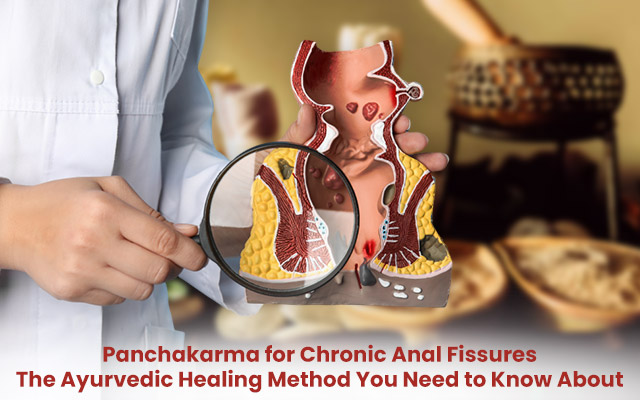
Do you fear using the bathroom because of that sharp, burning pain in your anal area? Many people silently struggle with this problem for months, trying creams or painkillers that bring only short-term relief. Chronic anal fissures can disrupt daily life — turning a simple act like sitting or walking into a painful experience.
If you’ve been seeking lasting comfort and natural healing, Ayurveda provides a safe and effective path. Through Panchakarma, the ancient Ayurvedic detox therapy, you can heal the root cause of the fissure rather than just its symptoms.
At Ayusya Ayurveda Superspeciality Treatment Centre, many patients have experienced lasting recovery through a personalised Panchakarma plan. If you’re searching for fissure ayurvedic treatment in Kolkata, here’s what you need to know about how Panchakarma can transform your healing journey.
Understanding the Problem: Why Fissures Become Chronic
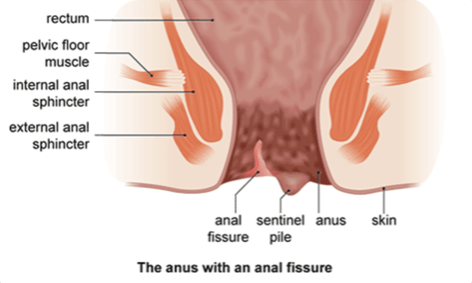
In Ayurveda, an anal fissure is known as Parikartika, meaning “a cutting pain around the anus.” It typically begins with constipation, hard stools, or excessive straining. But when ignored, the tiny tear in the lining becomes chronic, leading to:
- Sharp pain and burning during or after passing stool
- Bleeding or irritation
- Formation of a small skin tag near the anus
- Fear and anxiety before every bowel movement
Ayurveda explains that chronic fissures occur due to an imbalance in Vata (causing dryness and strain) and Pitta (causing inflammation and burning). Together, they disturb the body’s natural healing process.
That’s why quick fixes rarely work. The real solution lies in restoring internal balance — and this is where Panchakarma for anal fissure plays a key role.
What Is Panchakarma — and Why Is It Used for Fissures?
Panchakarma means “five actions” — a series of detox therapies designed to eliminate toxins, purify the body, and balance the three doshas (Vata, Pitta, Kapha).
In cases of chronic fissures, Panchakarma helps by:
- Softening and lubricating the colon
- Reducing inflammation and spasm in the anal muscles
- Improving digestion and removing toxin buildup
- Calming the overactive Vata that delays wound healing
While Panchakarma can include multiple therapies, Ayurvedic experts customise the Panchakarma protocols for ano-rectal disorders to suit each person’s body type and stage of fissure.
| Therapy | Purpose | Effect on Fissure Healing |
| Anuvasana Basti (Oil Enema) | Lubricates and nourishes the colon | Softens stool, reduces pain, eases bowel movement |
| Niruha Basti (Herbal Decoction Enema) | Flushes out toxins | Reduces inflammation and spasms |
| Virechana (Purgation Therapy) | Clears excess Pitta | Reduces burning and promotes tissue repair |
| Kshara Karma | Local alkaline application | Removes damaged tissue, helps new cells form |
| Agni Karma | Gentle cauterisation with heat | Promotes faster healing and closes the fissure |
| Murivenna Oil Application | Medicated oil used externally or by infiltration | Soothes pain and speeds up repair |
Step-by-Step Panchakarma Plan for Chronic Fissure
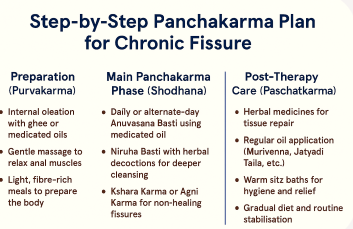
Every patient’s body is unique, so the process varies. However, a typical protocol for ayurvedic treatment for chronic fissure may look like this:
- Preparation (Purvakarma)
- Internal oleation with ghee or medicated oils
- Gentle massage to relax anal muscles
- Light, fibre-rich meals to prepare the body
- Internal oleation with ghee or medicated oils
- Main Panchakarma Phase (Shodhana)
- Daily or alternate-day Anuvasana Basti using medicated oil
- Niruha Basti with herbal decoctions for deeper cleansing
- Kshara Karma or Agni Karma for non-healing fissures
- Local oil applications or medicated suppositories for comfort
- Daily or alternate-day Anuvasana Basti using medicated oil
- Post-Therapy Care (Paschatkarma)
- Herbal medicines for tissue repair
- Regular oil application (Murivenna, Jatyadi Taila, etc.)
- Warm sitz baths for hygiene and relief
- Gradual diet and routine stabilisation
- Herbal medicines for tissue repair
This process can last from two to four weeks, depending on severity and response.
Therapies Explained in Simple Terms
Basti Therapy
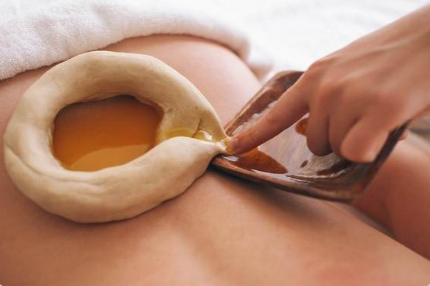
Basti means enema in Ayurveda, but unlike modern enemas, it’s gentle, herbal, and deeply nourishing. It works wonders for fissures because it calms Vata — the primary cause of pain, dryness, and tearing.
- Oil basti (Anuvasana) soothes and lubricates
- Herbal basti (Niruha) cleanses and detoxifies
Together, they promote natural bowel movement and healing from within.
Kshar Karma and Agni Karma
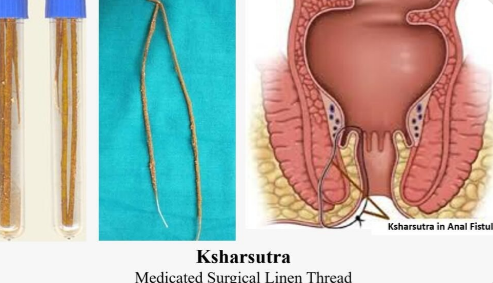
When the fissure is stubborn or non-healing, your Ayurvedic doctor may suggest kshara karma for fissure (applying a mild herbal alkaline paste) or agni karma for fissure (using controlled heat). Both destroy dead tissue and stimulate the growth of healthy new tissue. These procedures are quick, effective, and done under local application of soothing oils.
Murivenna and Ayurvedic Suppositories
Murivenna for fissure is a medicated oil blend used externally or through mild infiltration. It helps relax the sphincter, reduce swelling, and support wound healing.
In some cases, an Ayurvedic suppository for fissures, made from herbs and oils, is used for easy insertion and internal lubrication.
What Makes Panchakarma Different
Unlike creams or surgeries, Panchakarma doesn’t just treat the wound — it treats you as a whole.
It:
- Restores the body’s natural healing intelligence
- Prevents recurrence of fissure
- Improves digestion and bowel movement
- Calms anxiety, stress, and muscle spasms
- Strengthens the anal region naturally
That’s why patients who complete a Panchakarma program under expert supervision often report long-term relief rather than temporary comfort.
How Long Does Healing Take?
Healing depends on the severity of your fissure, your age, diet, and lifestyle habits.
- Mild cases: improvement in 2–3 weeks
- Moderate to chronic cases: 1–3 months
- Recurrent cases: may need follow-up basti or local therapy sessions
Consistency is key. Following the full protocol, including a proper diet and care, can help you regain pain-free bowel movements and confidence.
Safety and Expert Guidance
Panchakarma is safe when performed under the guidance of trained Ayurvedic doctors. However, unsupervised enemas or home experiments can worsen symptoms. Always get your therapy from qualified professionals who can decide which combination of basti therapy for fissure, kshara karma, or murivenna suits your condition.
If you’re in or around Kolkata, an experienced fissure ayurvedic treatment in Kolkata specialist at Ayusya Ayurveda can design your therapy plan after a proper consultation and physical assessment.
Heal Well and Live Comfortably
Chronic anal fissures may seem small, but they can drain your comfort, energy, and confidence. Ayurveda offers hope — not through suppression, but through transformation.
By balancing doshas, cleansing toxins, improving digestion, and using targeted local therapies, panchakarma for anal fissure gives lasting relief from pain and recurrence.
If you’re tired of living with constant discomfort, it’s time to try a natural, effective path to healing.
Book your consultation with Ayusya Ayurveda Superspeciality Treatment Centre today for fissure ayurvedic treatment in Kolkata — and start your journey towards complete recovery.
People Also Ask
- Can Ayurveda cure chronic fissures entirely?
Yes. With the right Panchakarma therapies, herbs, and diet, Ayurveda can heal fissures from the root and prevent recurrence.
- What is the best Ayurvedic therapy for fissures?
Basti therapy for fissures and local applications, such as Murivenna or Jatyadi Taila, are highly effective for pain relief and healing.
- Is Kshara Karma painful?
It may cause mild burning for a short time but is generally well tolerated. The procedure helps remove dead tissue and stimulates healing.
- How long does it take to recover through Panchakarma?
Mild fissures can heal within 2–3 weeks. Chronic cases may take up to 2–3 months, depending on your diet and response to treatment.
- What should I eat during Ayurvedic treatment for fissures?
A fibre-rich diet, including warm cooked foods, ghee, soups, and plenty of water, helps soften stools and supports healing. Avoid spicy, fried, and processed foods.