

In the ‘City of Joy’, emotions run deep — but lately, so does overthinking.
From Park Street cafés to Salt Lake offices, countless professionals find their thoughts looping like trams on College Street. The thoughts won’t stop, the heart races. Sleep drifts away. The calm feels foreign.
Between endless deadlines, traffic jams, and late-night scrolls, the city’s brightest minds are quietly burning out.
But Amidst The chaos, Something Beautiful is Happening Too
A return to roots, towards Ayurveda, a timeless science with grounded wisdom, where peace isn’t prescribed, but restored.
More and more professionals are seeking balance not in quick fixes, but in Ayurveda, the ancient science of life that restores calm by healing the mind-body continuum.
At Ayusya Ayurveda, a Superspeciality Ayurvedic Treatment Centre in Kolkata & Howrah, the approach is simple yet profound:
Heal the root. Balance the energies. Restore the calm.
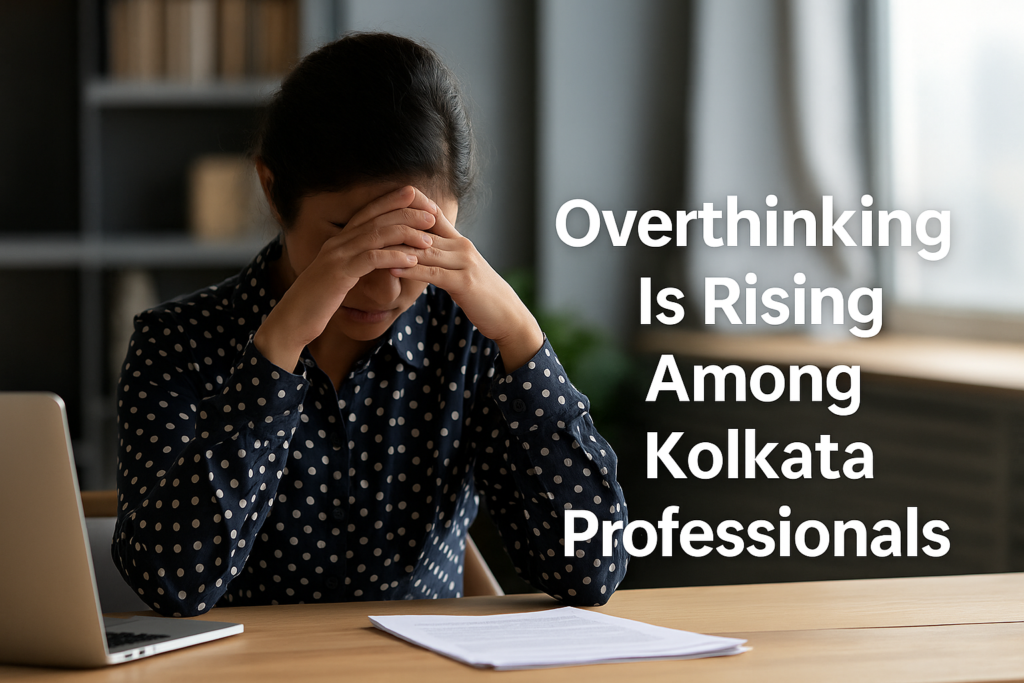
Ayurvedic Understanding: When Overthinking Becomes a Disorder
In Ayurveda, anxiety is known as Chittodvega — the disturbed vibration of the mind — often triggered by Atichintana, or excessive thinking.
This happens when Vata dosha (the bio-energy governing movement, nerve impulses, and thoughts) becomes aggravated.
When Vata rises beyond balance, it dries out the calm within. Thoughts move rapidly. The breath becomes shallow. The body tenses. Sleep breaks.
This pattern — common among modern professionals —is due to the disturbance of Prana Vata Prakopa, the sub-dosha governing the brain and nerves.
Ayurveda views this as a disturbance in Manovaha Srotas Dushti (blockage in mental channels) and depletion of Ojas (vital essence of stability and immunity).
The result:
- Racing thoughts that never stop
- Fear without reason
- Fatigue despite rest
- A mind that won’t stay still
Over time, this imbalance spreads through the gut, nerves, and hormones, manifesting as digestive issues, sleep loss, irritability, and burnout — the familiar story of today’s city professional.
| Modern Trigger | Ayurvedic Interpretation | Early Symptoms (Lakshanas) |
| Long commutes and irregular meals | Aggravates Vata and weakens Agni | Bloating, low energy, irritability |
| Constant phone use and digital overload | Overstimulates Manovaha Srotas | Mental fog, sleeplessness |
| High work pressure | Increases Rajas (agitation) | Restless thoughts, heart palpitations |
| Excess caffeine and frequent cold foods | Dries Vata and increases Ama | Uneasy digestion, jitteriness |
| Night-time screen exposure | Disturbs circadian Vatarhythm | Late-night anxiety, fear, exhaustion |
Why Quick Fixes Don’t Heal
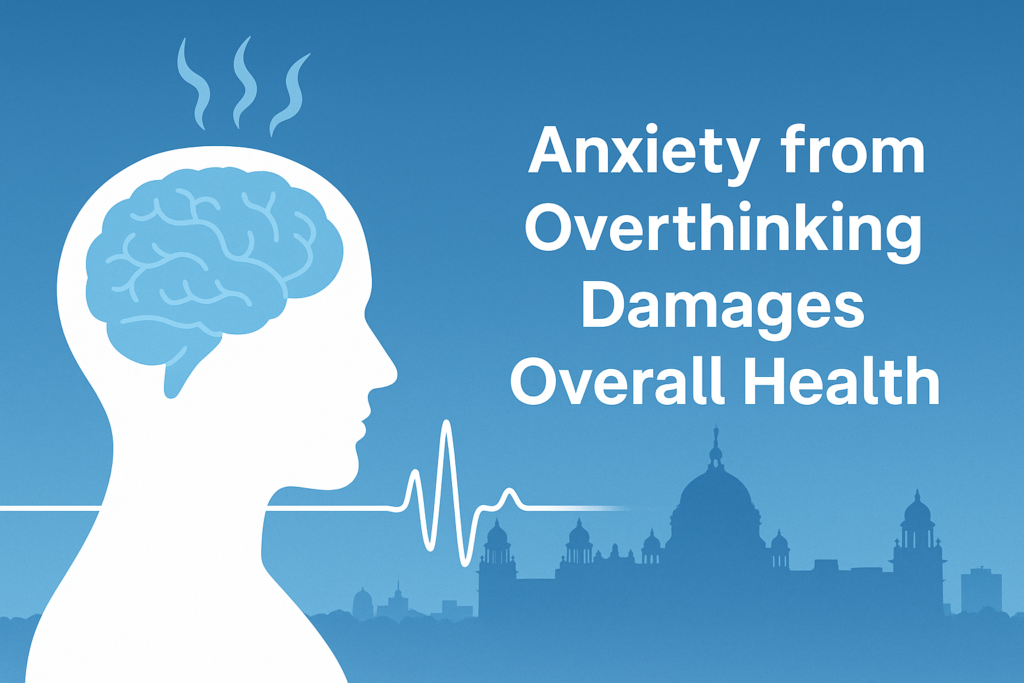
Painkillers, sedatives, or “stress pills” numb the discomfort but never repair the root.
They suppress Vata’s cry for balance — a temporary silence, followed by louder unrest.
In Ayurvedic philosophy, Vata cannot be suppressed; it must be soothed. This is why lasting calm never comes from a pill — it comes from restoring the rhythm of life.
“When Vata is calm, the mind is steady; when Vata is disturbed, even silence feels loud.”
Why Ayurveda Works?
Ayurveda heals by re-aligning, not suppressing. It restores order to chaos — both physical and emotional.
It doesn’t just treat anxiety — it heals the roots of your overthinking, from the gut to the mind.
At Ayusya Ayurveda, every therapy is performed under expert supervision, designed to suit your Prakriti, and aimed at long-term stability — not dependency.
How Ayurveda Heals Anxiety from Overthinking
Ayurveda treats anxiety not as a mental illness, but as a systemic imbalance — a disturbance of energy, digestion, and emotion.
At Ayusya Ayurveda, the focus is always on the root cause, not the outer symptom.
The healing framework integrates three ancient sciences:
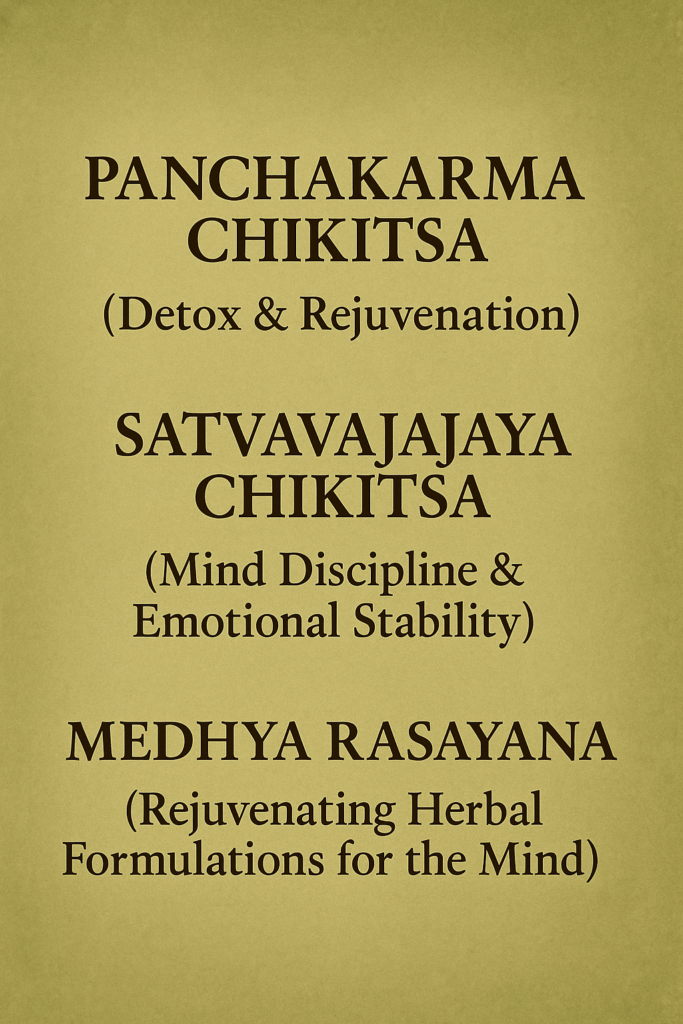
Panchakarma Chikitsa: Cleansing the Mind and Nervous System
Panchakarma is Ayurveda’s fivefold purification therapy that works from the inside out — physically, mentally, and emotionally. For anxiety, it is used to pacify Vata, detoxify the body, and calm the Prana Vata in the head and gut region.
Core Therapies Used at Ayusya Ayurveda:
- Snehana
The Ayurvedic process of oleation therapy. It involves both internal and external use of medicated oils or ghee to lubricate tissues, loosen toxins, and prepare the body for detoxification.
- Abhyanga (Oil Massage)
A specific type of Snehana, comprising warm, medicated oils like Ksheerabala Taila or Bala Taila to nourish the nervous system and release stored tension.
- Shirodhara
A continuous flow of warm oil on the forehead soothes Prana Vata and reduces cortisol levels. It induces deep relaxation and restful sleep.
- Nasya
Medicated oils applied through the nose to clear Manovaha Srotas and support mental focus.
- Swedana (Herbal Steam)
Removes toxins (Ama) and reduces stiffness caused by chronic stress.
- Basti (Medicated Enema)
Known as the hero therapy for Vata disorders, it regulates the gut-brain axis and relieves anxiety, constipation, and restlessness.
Together, these therapies act like a gentle reset button for the nervous system — cleansing, grounding, and stabilising the flow of thought and energy.
Satvavajaya Chikitsa: Reclaiming the Still Mind
This classical Ayurvedic method translates to “strengthening Sattva” — the pure, stable quality of the mind. In today’s language, it means retraining your thoughts toward calm and clarity.
Our Ayurvedic doctors guide this through:
- Breathwork (Pranayama)
Practices like Anulom Vilom and Bhramari reduce the overactivity of Vata and stabilise the breath.
- Meditation (Dhyana)
Helps regulate Rajas (mental agitation) and increase Sattva (mental peace).
- Lifestyle discipline (Dinacharya)
Gentle routines that regulate sleep, meals, and screen exposure — crucial for today’s professionals.
When mind training meets bodily balance, thought loops naturally settle.
Medhya Rasayana: Nourishment for the Mind
Medhya Rasayana are Ayurvedic herbs known for their power to strengthen intellect, memory, and emotional resilience.
At our ayurvedic clinics in Kolkata and Howrah, personalised herbal formulations are selected based on an individual’s Prakriti (constitution) and Vikriti (imbalance).
Common herbs include:
- Brahmi (Bacopa monnieri): Enhances focus and calms excessive thinking.
- Ashwagandha (Withania somnifera): Reduces cortisol and anxiety; builds endurance.
- Jatamansi (Nardostachys jatamansi): Grounds emotional restlessness and improves sleep.
- Tagara (Valeriana wallichii): Acts as a natural sedative without dulling the senses.
- Shankhapushpi (Convolvulus pluricaulis): Improves concentration and reduces fatigue.
These are often administered with Ghrita (medicated ghee) to enhance absorption and pacify Vata.
A Comparative Recap
| Herb | Ayurvedic Action | How It Helps (Therapeutic Effect) |
| Brahmi (Bacopa monnieri) | Improves Medha (intellect) | Reduces racing thoughts and enhances mental focus |
| Ashwagandha (Withania somnifera) | Strengthens Ojas | Lowers cortisol, reduces stress, and promotes deep sleep |
| Jatamansi (Nardostachys jatamansi) | Calms Rajas | Stabilises mood and relieves mental and emotional tension |
| Tagara (Valeriana wallichii) | Induces Nidra (sleep) | Eases nervous restlessness and supports better sleep |
| Shankhapushpi (Convolvulus pluricaulis) | Supports Sattva | Improves concentration and reduces mental fatigue |
The Mind–Body–Gut Connection
Ayurveda teaches that mental clarity begins in digestion.
When Agni (digestive fire) weakens due to irregular meals or stress, Ama (toxins) form, clouding both the body and the mind.
That’s why Ayusya’s approach includes gentle Agni Deepana (digestive strengthening), warm meals, and herbal teas to rekindle digestive intelligence.
A nourished gut supports a calm mind — a truth modern science now echoes through the gut-brain axis.
Lifestyle Guidance: Ayusya Ayurveda Recommends:
Our approach doesn’t end with therapy. Healing continues in how you live, eat, and rest.
Daily recommendations for balancing Vata and calming anxiety:
- Eat warm, fresh meals — khichdi, soups, and ghee-infused rice.
- Avoid caffeine, frozen foods, and irregular mealtimes.
- Massage the soles with sesame oil (Padabhyanga) before bed.
- Begin mornings with 10 minutes of Pranayama.
- Take screen breaks every 90 minutes.
- Keep your evenings quiet, with light food and warm water.
When routine becomes sacred, peace becomes natural.
Your Calm Mind Is Not a Luxury — It’s Your Birthright
In the heart of our city’s rush, peace may seem distant. But Ayurveda reminds us: Stillness is not silence — it’s balance.
Ayusya Ayurveda welcomes you to rediscover that balance naturally — through Panchakarma, herbal wisdom, and mindful living.
We believe: “A calm mind is not the absence of thought; it’s the mastery of it.”
And… you deserve a mind that feels steady, a body that feels light, and a breath that feels free.
Start Your Journey Today!
People Also Ask
Why does overthinking feel worse at night?
Because Vata dosha increases after sunset, the mind becomes more active and unsettled. Calming evening routines help pacify it.
Can Ayurveda treat anxiety without heavy medication?
Yes. Ayurveda heals anxiety through natural herbs, Panchakarma therapies, and mind-restoring practices — no dependency, no side effects.
How long does Ayurvedic anxiety treatment take?
Results depend on chronicity. Most notice improved sleep and calm within weeks under guided therapy.
Does diet affect anxiety?
Absolutely. Irregular meals and cold foods disturb Agni and Vata, leading to restlessness. Warm, spiced meals restore balance.
Can Ayurveda help with work-related stress in Kolkata?
Yes. Ayurveda addresses mental strain, irregular routines, and nervous exhaustion — the common pattern in urban professionals.