

Back pain isn’t new to us. It’s there in the office chair you sit on for ten hours straight. It’s there in the jolting bus rides, in the crowded trains, and in the constant push to “get through the day.”
But lately, something is changing. People aren’t just looking for pain relief — they’re looking for real healing.
That’s where Ayurveda steps in — not with painkillers or quick fixes, but with ancient science that restores balance, strength, and inner calm.
Ayusya Ayurveda, a superspeciality Ayurvedic Clinic in Kolkata (& Howrah), leads this shift. Experts here offer healing through natural ways, root-cause care, and whole-body balance.
The simple mission is to help people remain free from illness through safe Ayurvedic treatment, Panchakarma therapy, and lifestyle guidance.
The Ayurvedic Understanding: When “Vata” Goes Out of Balance
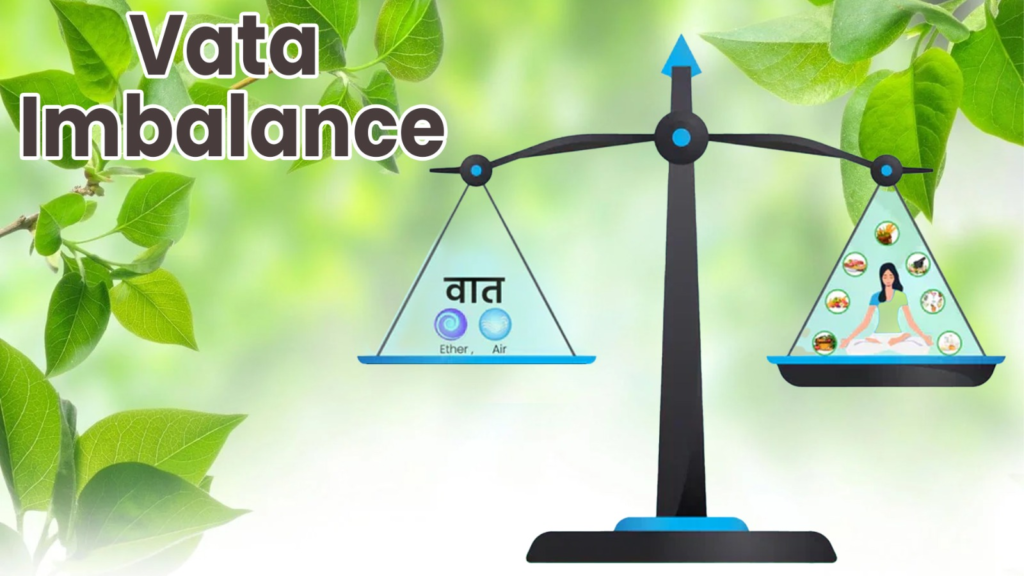
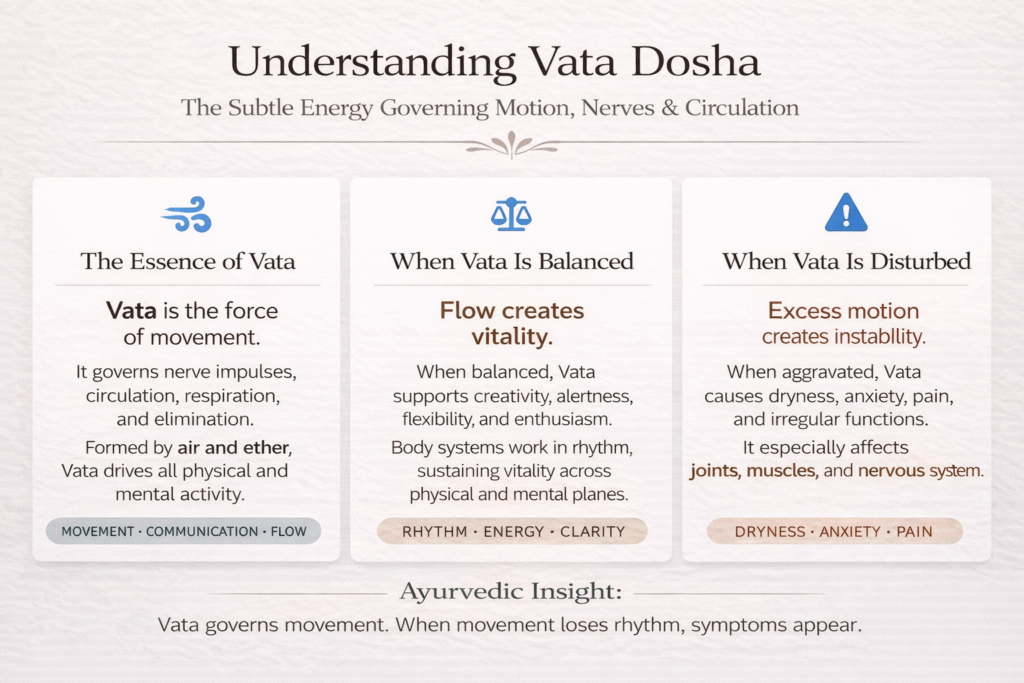
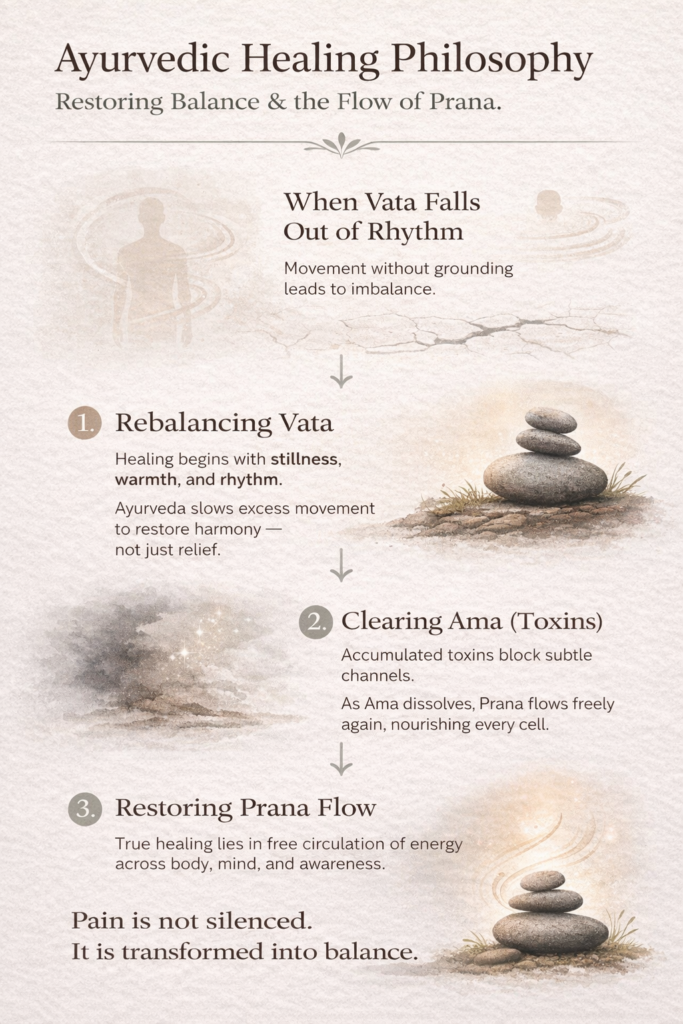
In Ayurveda, chronic back pain is not seen as a random ache. It’s viewed as a symptom of an internal imbalance — especially of the Vata dosha (the bio-energy governing movement, nerve impulses, and circulation).
When Vata gets aggravated — through long sitting hours, stress, irregular meals, cold food, or lack of sleep — it dries up the body’s lubricating fluids and weakens Asthi dhatu (bone tissue) and Mamsa dhatu (muscle tissue).
This condition, called Kati Shoola (pain in the lumbar region), is often a result of Sandhivata — degeneration in the spinal joints due to aggravated Vata.
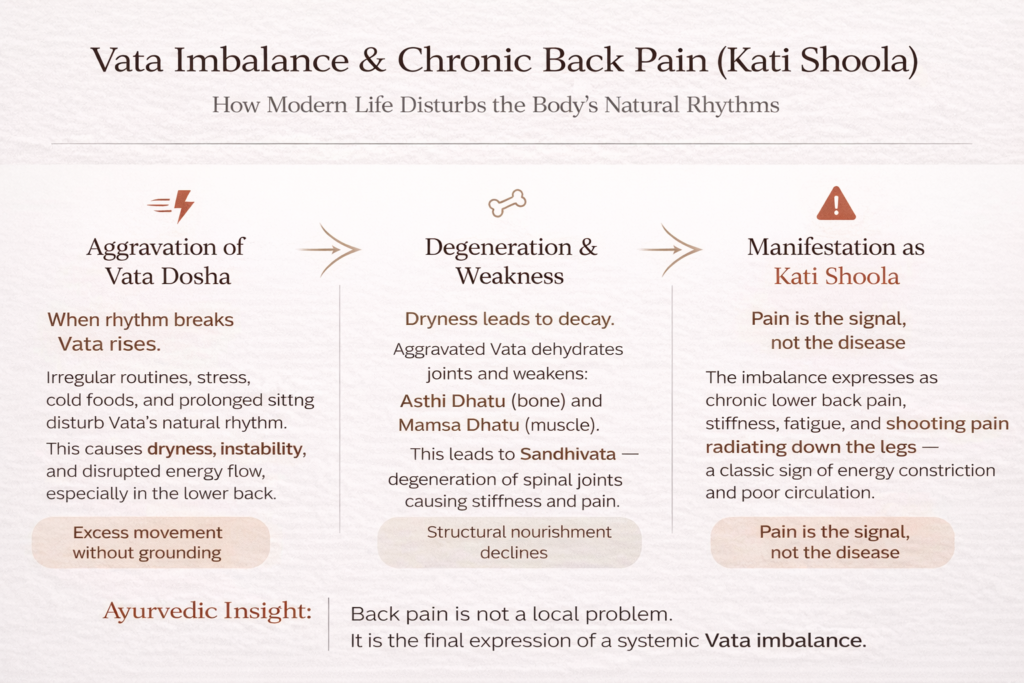
The outcome?
- Stiffness in the back
- Shooting pain down the legs
- Fatigue, tingling, and poor flexibility
Instead of masking pain, Ayurveda works to balance Vata, remove Ama (toxins), and restore the natural flow of Prana (vital life energy).
Why Painkillers Fall Short — Especially for Kolkata’s Lifestyle
Painkillers may bring a few hours of comfort. But they also bring dependency.
They dull the pain — not the reason behind it. Over time, they burden your liver, affect digestion, and disturb your body’s natural Agni (digestive fire).
For Kolkata’s professionals — from office workers in Salt Lake Sector V to teachers in Howrah — this pattern is common:
“I pop a painkiller before work, and by evening, it’s back again!”
Ayurveda says: stop silencing the pain. Understand it. Simply because only when you treat the root cause can the body truly heal.
Panchakarma for Chronic Back Pain: Deep Detox for Deep Healing
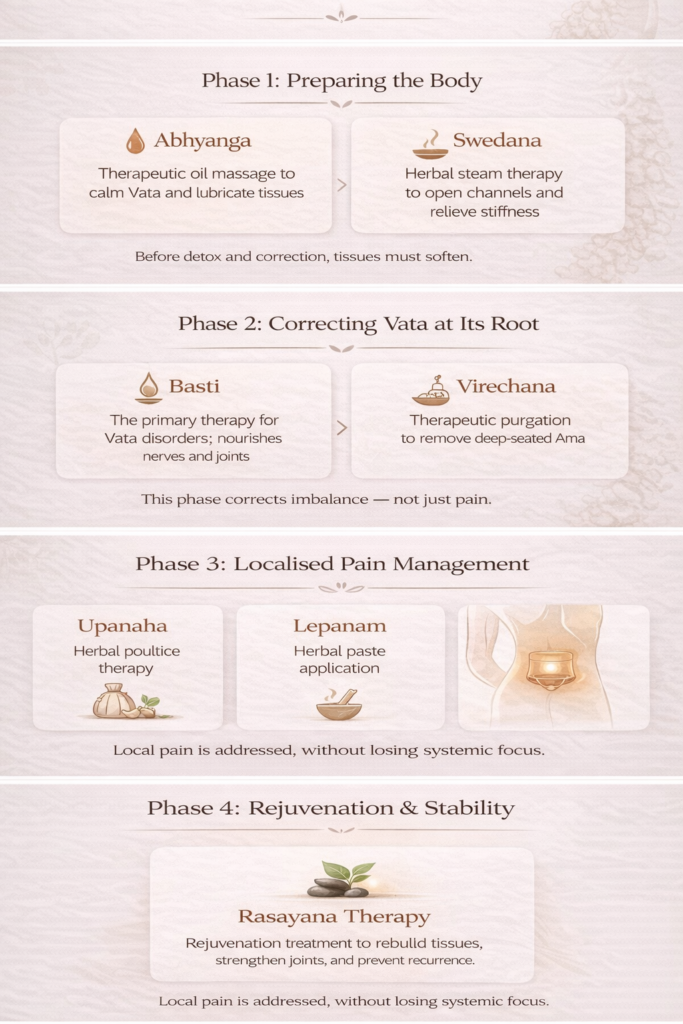
At Ayusya Ayurveda, a Superspeciality Ayurvedic Clinic in Kolkata & Howrah, the focus is simple — bring balance back through Panchakarma Chikitsa (five-fold purification therapy).
1. Abhyanga (Therapeutic Oil Massage)
A full-body massage using warm, medicated oils such as Mahanarayana Taila or Dhanwantharam Taila. It nourishes Vata, improves circulation, reduces stiffness, and relaxes muscles.
2. Swedana (Herbal Steam Therapy)
After Abhyanga, herbal steam helps open the channels, remove Ama, and soothe the spine. Perfect for conditions like Sciatica (Gridhrasi) or Lumbar Spondylosis.
3. Basti (Medicated Enema Therapy)
Known as the king of Vata treatments, Basti Karma delivers herbal oils or decoctions to the colon — the seat of Vata. This therapy reduces inflammation, strengthens the spine, and relieves deep-seated stiffness.
4. Virechana (Therapeutic Purgation)
Gentle cleansing through herbal formulations to remove Pitta and toxins. It supports liver function and helps reduce inflammation in musculoskeletal conditions.
5. Upanaha (Poultice Therapy)
Application of warm herbal poultices — made with Elakizhi (leaf bundle) or Podikizhi (herbal powder bundle) — directly on the back or joints. It reduces swelling, stiffness, and pain naturally.
6. Lepanam (Herbal Paste Application)
A medicated herbal paste, rich in anti-inflammatory herbs, is applied to the affected areas. It helps reduce inflammation and accelerate local healing.
7. Janu Basti / Kati Basti (Localised Oil Retention Therapy)
A circular dough dam is placed over the lower back (Kati) or the knees (Janu) and filled with warm oil. The oil penetrates deeply, nourishing tissues and calming nerve irritation.
8. Rasayana Therapy (Rejuvenation Treatment)
After detoxification, Rasayana herbs such as Ashwagandha, Guggulu, and Shallaki are prescribed to rebuild strength, enhance immunity, and prevent recurrence.
Ayurvedic Formulations for Spinal Strength and Tissue Repair
Ayurvedic herbs don’t numb the pain — they rebuild what’s weak.
- Ashwagandha (Withania somnifera) – Reduces stress and inflammation, strengthens muscles and nerves.
- Guggulu (Commiphora mukul) – Breaks down Ama, relieves joint stiffness.
- Shallaki (Boswellia serrata) – Improves joint mobility and reduces pain naturally.
- Turmeric (Haridra) – Powerful anti-inflammatory with curcumin that heals from within.
- Dashamoola – A ten-root formulation that restores Vata balance and relieves deep tissue pain.
All herbs are part of Shamana Chikitsa (palliative care) and support the Panchakarma detox phase.
Healing Beyond Pain — Lifestyle According to Ayurveda
Ayurvedic recovery doesn’t stop at the treatment table. It continues with daily living — Dinacharya (daily routine) and Ahara Vihara (diet and habits).
Diet – Follow a Vata-pacifying Ahara
- Prefer warm, cooked meals — soups, kitchari, and herbal teas.
- Include ghee, sesame oil, and spices like ginger, cumin, and turmeric.
- Avoid cold drinks, dry snacks, and processed foods that aggravate Vata.
Lifestyle – Bring Back Rhythm
- Maintain consistent meal and sleep times.
- Avoid sitting for long hours — stand, stretch, and walk often.
- Gentle Yoga Asanas like Bhujangasana (Cobra pose), Shalabhasana (Locust pose), and Setu Bandhasana (Bridge pose) are excellent for spinal flexibility.
- Practice Pranayama (breathing techniques) to calm the nervous system.
At Ayusya Ayurveda, lifestyle guidance is a core part of healing — not an afterthought. Because without daily discipline, no medicine sustains balance.
Kolkata’s Reality: Why Locals Are Turning to Ayurveda
Kolkata has always had a cultural pulse that respects natural healing — from ‘the herbal oil your grandmother used’ to the ‘turmeric milk that healed a sprain’.
Now, modern people— from Salt Lake professionals to Behala homemakers — are rediscovering this wisdom. Why? Because they’re done with temporary relief.
They want:
- Natural pain management without dependence
- Safe long-term care
- Stress relief that calms both body and mind
- A system that understands them holistically
And Ayurveda, when practised with integrity, offers exactly that.
Painkillers vs. Ayurveda – A Clear Comparison
| Factor | Painkillers | Ayurveda |
| Relief Duration | Short-term | Long-term |
| Root Cause Healing | No | Yes |
| Side Effects | Possible | Minimal |
| Dependency | High | None |
| Detoxification | No | Strong |
| Muscle Repair | Weak | Deep tissue repair |
| Mental Balance | None | Balanced, calm mind |
When you look closely, it’s clear — Ayurveda isn’t just another treatment. It’s a return to balance.
When to Seek Ayurvedic Help
Visit your Ayurvedic practitioner if you notice:
- Back discomfort after long office hours or driving
- Pain radiating to the hips or legs
- Morning stiffness or strain
- Tingling or numbness in the feet
- Difficulty bending or standing for long
- Pain worsening in cold or humid weather
These are early signs your Vata is aggravated — and it’s time to restore balance before degeneration sets in.
Healing Starts in Awareness
You don’t have to live with pain. You don’t have to rely on pills.
Ayurveda reminds us that the body heals when we listen — not when we suppress. At Ayusya Ayurveda, every therapy — from Basti to Rasayana — is designed to help you naturally reclaim movement, comfort, and energy.
So if you’re from Kolkata or Howrah, and your back pain has become part of your story — rewrite it. Let Ayurveda guide you back to strength. Naturally.
Visit Ayusya Ayurveda and begin your journey to true relief.
“For us— Healing is not just about less pain — it’s about more life itself”
People Also Ask
Why does my back pain worsen during Kolkata’s chilly winter mornings?
Cold weather aggravates Vata dosha — the energy linked with dryness and stiffness. The low temperature constricts muscles and reduces blood flow, making pain sharper in the morning.
How can I keep my spine warm and relaxed this season?
Daily Abhyanga (warm oil massage) with Dhanwantharam Taila or Mahanarayana Taila before bath helps retain heat, ease stiffness, and nourish joints naturally.
Why do heaters and cold floors make back pain unpredictable?
Sudden temperature shifts disturb Vata balance. Use warm clothing and avoid sitting directly on cold floors or surfaces.
Can winter food habits worsen pain?
Yes. Cold, dry, and raw foods increase Vata. Opt for warm soups, spiced milk, and ghee-rich meals to maintain flexibility and digestion.
Is winter a good time for Panchakarma therapy?
Absolutely. Winter strengthens digestion and immunity — the ideal season for Basti (medicated enema) and Swedana (herbal steam) to detox and rejuvenate deeply.